YEAR
2021
CITY
MOSCOW
SERVICE
VISITOR EXPERIENCE

THE BRIEF
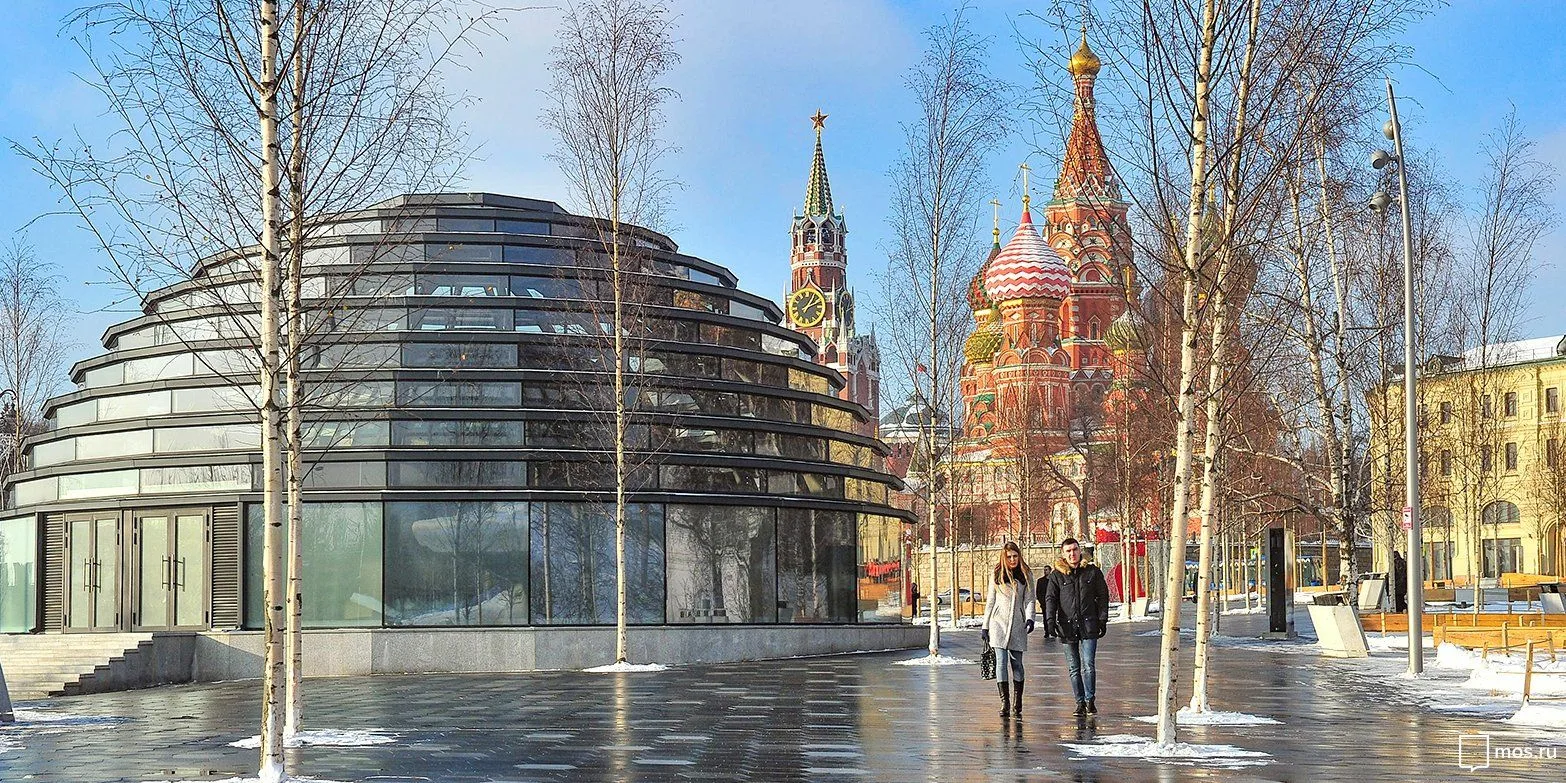
Located inside the Dome Pavilion at Zaryadye Park — Moscow’s first major public park created in more than 50 years and one of the city’s most internationally recognised urban projects, included by Time magazine in its 2018 list of the “World's Greatest Places” — the Tourist Information Centre was conceived as a new type of public urban interface.
Commissioned by the Moscow Tourism and Hospitality Development Office, the project was intended to function not simply as a tourist help desk, but as a dynamic spatial gateway into the cultural, architectural, and social life of the city. Located near the Kremlin at the starting point of many major tourist routes, the centre needed to combine navigation, storytelling, urban orientation, and real-time information systems within a compact multimedia environment.
Pitch was commissioned to develop the multimedia concept, visitor experience logic, interface systems, audiovisual content, graphic language, and integrated digital infrastructure for the pavilion.
MY ROLE
I led the project as Creative Director and Head of the Creative Group, overseeing the development of the visitor experience and multimedia communication system from concept through implementation.
My role focused on defining the conceptual framework and spatial logic that transformed the pavilion from a traditional tourist information centre into a real-time urban interface. I developed the narrative and interaction strategy connecting physical architecture, digital infrastructure, multimedia systems, and visitor navigation into one coherent public experience.
I also directed the development of multimedia content, interface systems, motion graphics, infographics, and audiovisual storytelling, ensuring consistency across all communication layers — from architectural media surfaces to touchscreen interaction logic and multilingual navigation systems.
In close collaboration with designers, developers, media teams, and city stakeholders, we developed an integrated information environment capable of functioning simultaneously as orientation system, public media installation, and immersive gateway into the city.
THE CHALLENGE
Tourist information centres typically operate as transactional spaces: places for maps, brochures, and basic orientation. The challenge here was fundamentally different.
The project needed to transform urban information into an immersive public experience capable of helping visitors emotionally and spatially understand Moscow as a living cultural system rather than as a disconnected list of attractions. The centre had to operate simultaneously as navigation tool, media installation, city guide, and public communication platform — within a relatively compact architectural footprint located inside one of the most symbolically charged urban sites in Russia.
Another challenge was informational scale. Moscow is not a city easily reduced to a simple tourist narrative. Thousands of constantly changing events, locations, routes, institutions, festivals, parks, museums, and cultural venues needed to be translated into an interface logic that visitors could understand intuitively and use in real time.
The project also required seamless integration between physical space and live digital infrastructure. Information systems, multimedia content, navigation, interface design, LED environments, QR systems, and real-time data management had to function as one coherent spatial experience rather than separate technological layers.

THE APPROACH
The conceptual move was to treat the information centre not as a service point, but as a physical interface to the city itself.
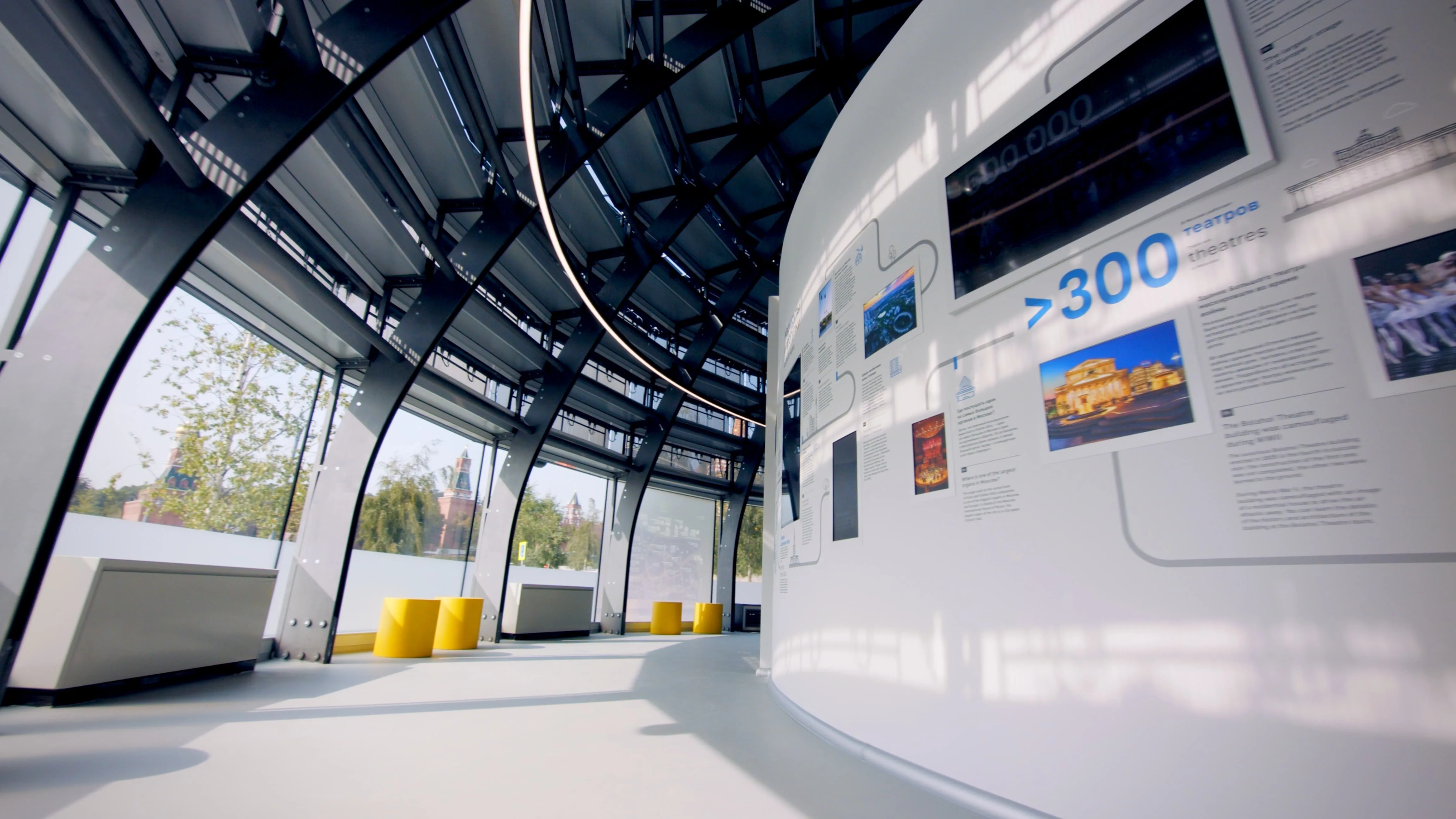
Rather than presenting information through conventional signage and screens, the pavilion was designed as a media environment where architecture, interface systems, and urban data operate together as one continuous visitor experience. The centre translates Moscow into a navigable real-time system — allowing visitors to move fluidly between physical space and digital urban infrastructure.
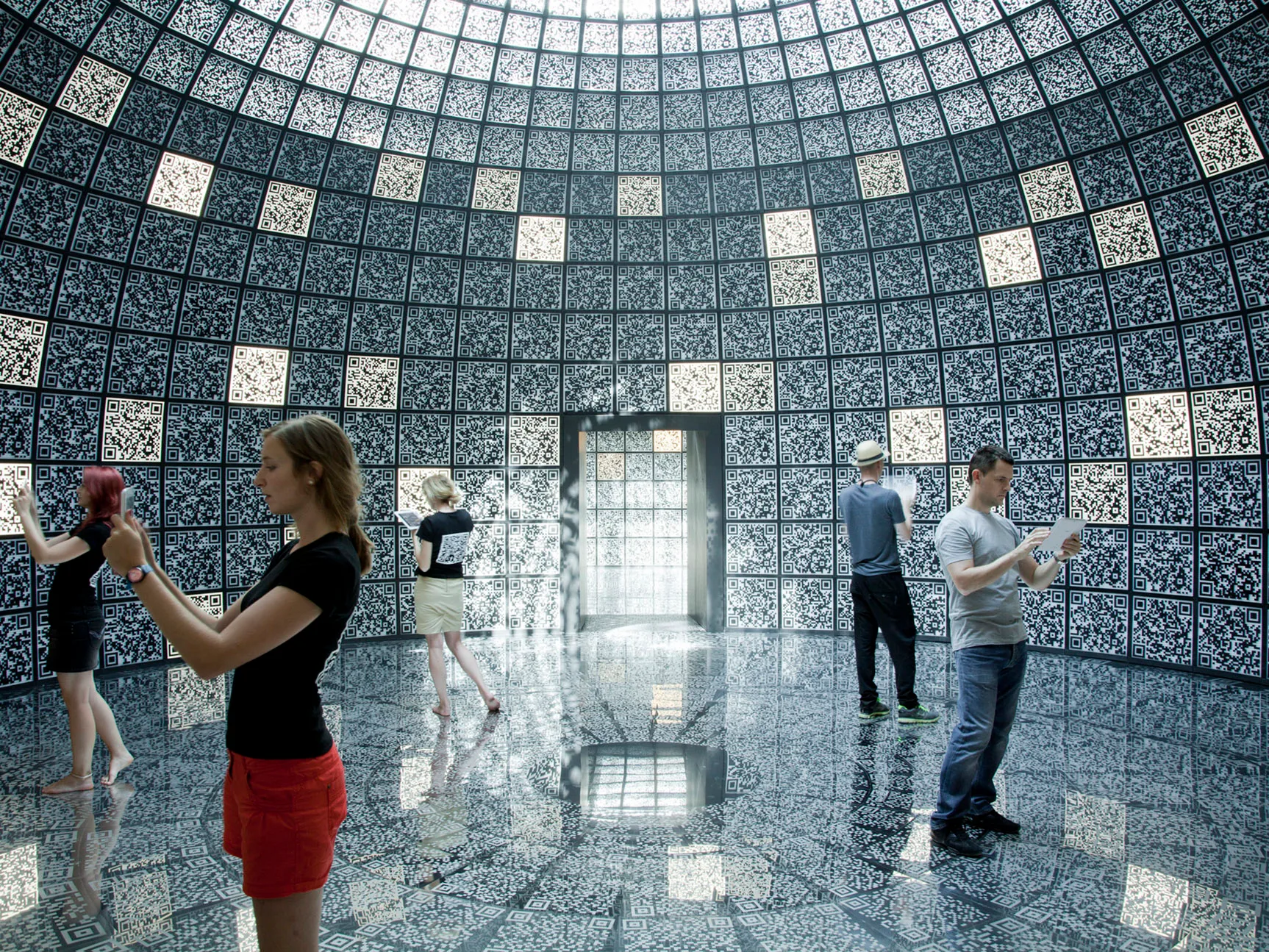
At the centre of the pavilion sits a circular multimedia core beneath the dome structure, surrounded by radial LED displays and immersive information layers. The architecture itself became part of the communication system: the interior dome was transformed into a field of illuminated QR codes functioning simultaneously as scenography, navigation, and interactive interface. By scanning the walls, visitors gain immediate access to constantly updated information about museums, theatres, festivals, gastronomy, parks, public events, and urban routes throughout Moscow.
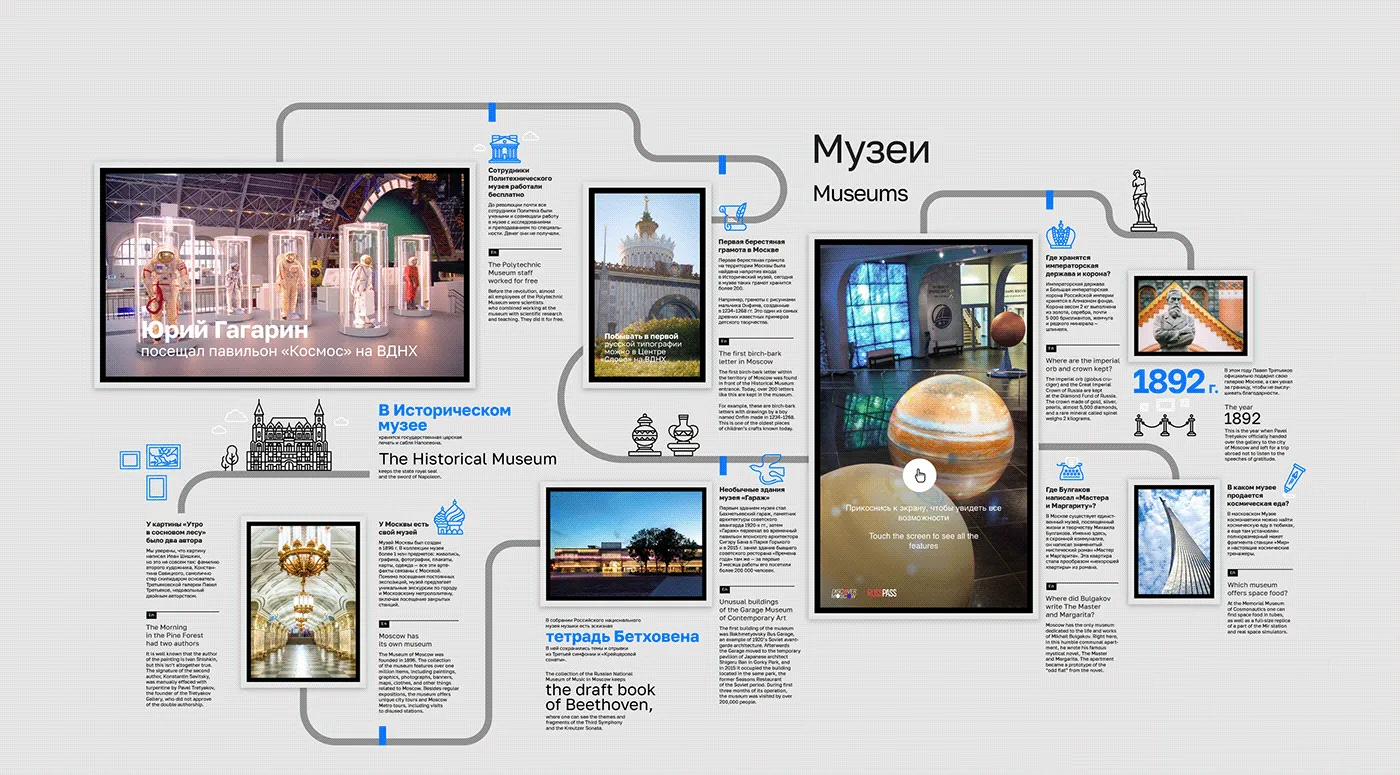
Narrative architecture was organised around the idea of the city as a living cultural network rather than a collection of isolated attractions. More than 400 points of interest were integrated into a multilingual content management system connected to live city databases, allowing information to update dynamically in real time. Visitors could build personalised routes, explore thematic layers of the city, and navigate Moscow through intuitive interaction rather than static instruction.
A major emphasis was placed on interface design as part of the overall spatial storytelling system. Graphic language, infographics, touchscreen systems, motion graphics, LED environments, and audiovisual content were developed as one integrated design framework. The result was a seamless transition between architecture, information, and interaction.
The multimedia environment also functioned as an urban storytelling platform. More than 50 minutes of original audiovisual content and 33 custom films were produced to communicate Moscow through atmosphere, movement, and lived experience rather than through conventional tourism marketing language.
The result is a compact but highly dense civic media environment where visitors do not simply receive information about Moscow, but begin experiencing the city before leaving the pavilion itself.
THE RESULT
Opened in 2020, the Moscow Tourist Information Centre established a new model for how urban information systems can operate as immersive public experience rather than administrative infrastructure.
The project combined multimedia architecture, real-time data integration, multilingual interaction systems, LED media environments, and spatial storytelling into one coherent civic interface. By merging physical and digital navigation layers, the pavilion transformed orientation itself into a cultural experience.
The project received the prestigious iF Design Award Gold for Public Exhibition / Interior Design, recognising its innovative integration of interface design, architecture, and urban communication systems.
More importantly, the project demonstrated how even compact public spaces can function as scalable urban communication platforms — translating the complexity of a megacity into an intuitive, emotionally engaging visitor experience.