YEAR
2020
CITY
KRASNOYARSK
SERVICE
PUBLIC SPACES & SHOW
THE BRIEF
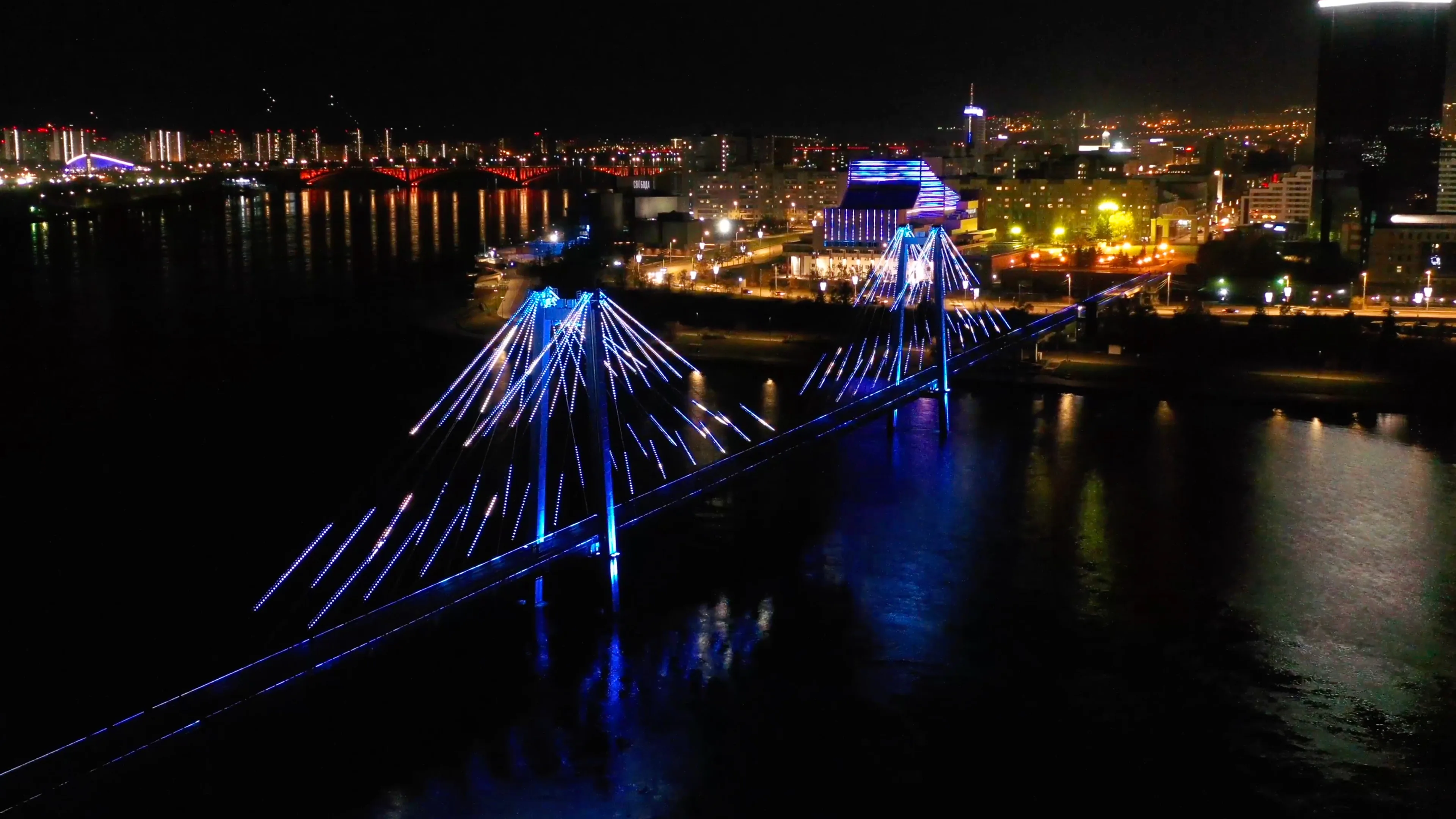
“The Heart of Siberia” was conceived as a permanent urban media environment for Krasnoyarsk — a city-scale audiovisual system designed to transform a fragmented infrastructural zone into a coherent public cultural experience.
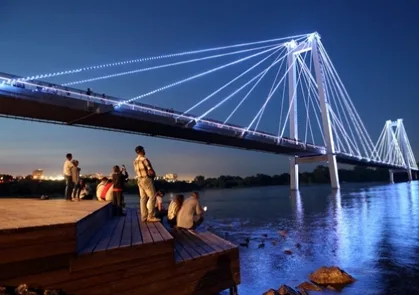
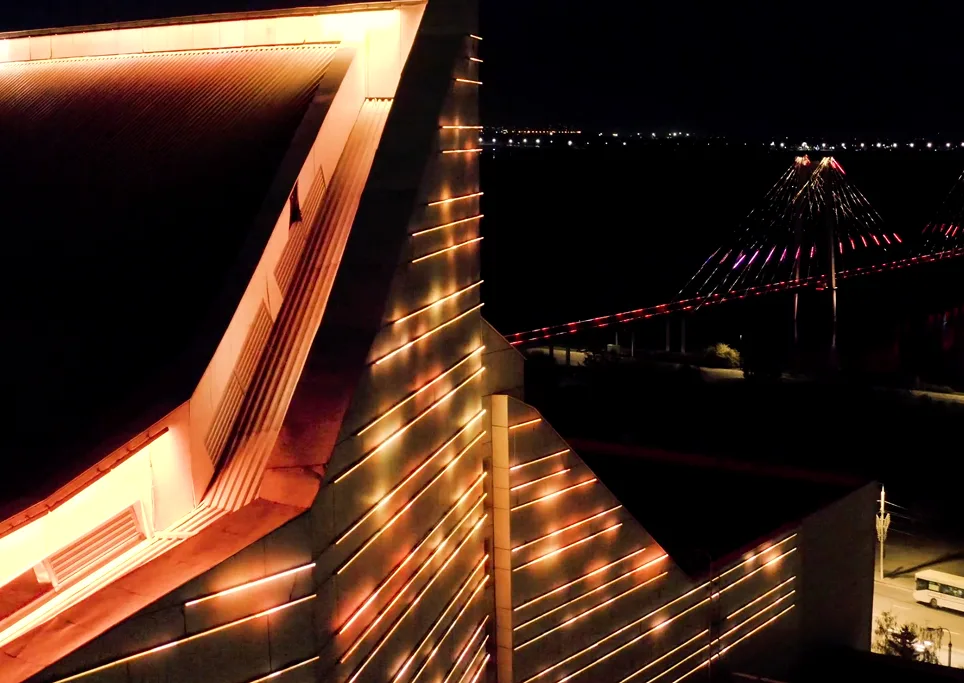
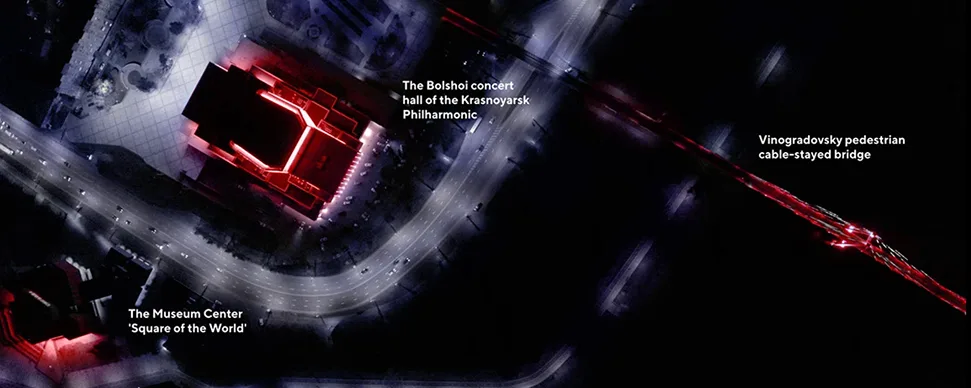
The project connects three major urban landmarks located along the Yenisei River: the 550-metre Vinogradovsky pedestrian bridge, the Museum Centre “Ploshchad Mira” (the largest contemporary art venue in Siberia), and the Bolshoi Concert Hall of the Krasnoyarsk Philharmonic. Rather than functioning as isolated architectural objects, these structures were reimagined as parts of one unified spatial narrative embedded into the city itself.
Pitch was commissioned to develop the conceptual framework, narrative structure, audiovisual language, lighting choreography, multimedia content, and technical integration strategy for a permanent urban lighting and sound environment operating at metropolitan scale.
MY ROLE
I served as Creative Director, Scriptwriter, and Creative Producer for the project, leading the development of its conceptual framework, narrative structure, and audiovisual language.
My role focused on translating the identity of Krasnoyarsk into a coherent urban storytelling system operating through light, sound, rhythm, and architectural infrastructure. I developed the narrative logic and emotional sequencing of the show, defining how distributed urban elements could function together as one continuous public experience.
I also directed the development of audiovisual content, lighting dramaturgy, and media choreography, ensuring conceptual consistency between narrative intention, technical systems, and the physical environment of the city itself.
In close collaboration with multimedia artists, lighting engineers, programmers, and technical specialists, we developed an integrated urban media environment capable of functioning simultaneously as public artwork, civic landmark, and permanent experiential infrastructure.
THE CHALLENGE
Large-scale urban lighting projects often become decorative infrastructure: technically impressive, but emotionally interchangeable. The challenge here was fundamentally different.
The project needed to create a lasting civic experience capable of translating the identity, atmosphere, and emotional memory of Krasnoyarsk into spatial media language — without relying on conventional representational imagery or monumental spectacle. Because of the physical limitations of the architectural surfaces, realistic projection mapping was impossible across much of the site. The narrative therefore had to emerge through abstraction: colour systems, rhythm, light behaviour, movement, and associative visual language.
Another challenge was urban scale. The project stretches across a distributed architectural environment rather than a single façade or public square. Bridge cables, media facades, riverfront infrastructure, concert architecture, and pedestrian movement all had to operate as parts of one synchronised experiential system visible from multiple viewpoints across the city.
The environment also had to function permanently in extreme Siberian climatic conditions, including strong winds and winter temperatures reaching –40°C, requiring highly robust technical integration and automation systems
THE APPROACH
The conceptual move was to treat the city itself as a responsive narrative surface.
Rather than projecting content onto architecture, the project transformed urban infrastructure into a living emotional interface capable of expressing the identity and atmosphere of Krasnoyarsk through light, rhythm, sound, and motion. The show was structured around the idea of genius loci — the emotional and geographic character of the city — translated into abstract audiovisual language rather than literal representation.
Narrative architecture was organised into a sequence of thematic chapters reflecting the symbolic geography of Siberia and Krasnoyarsk: the Yenisei River, taiga forests, industrial energy, snow and ice, Krasnoyarsk Pillars, hydroelectric power, mountains, and the city itself as the “Heart of Siberia.” Each chapter was assigned its own colour logic, movement dynamics, emotional rhythm, and audiovisual behaviour.
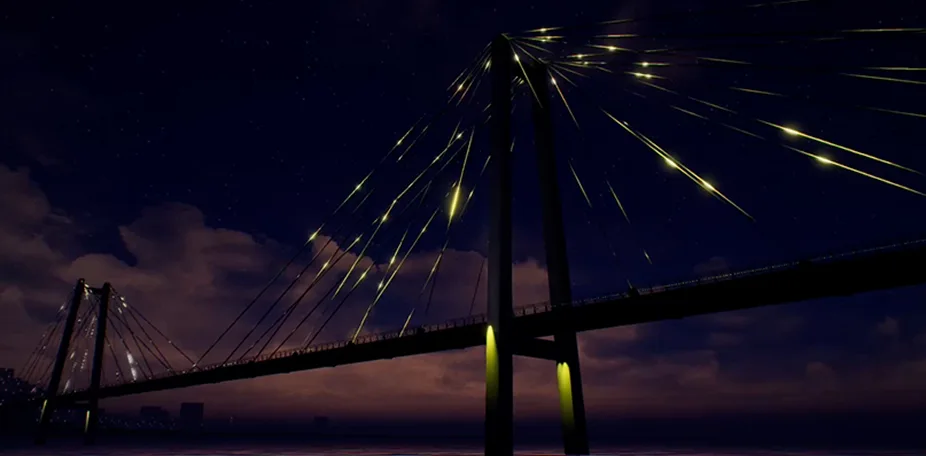
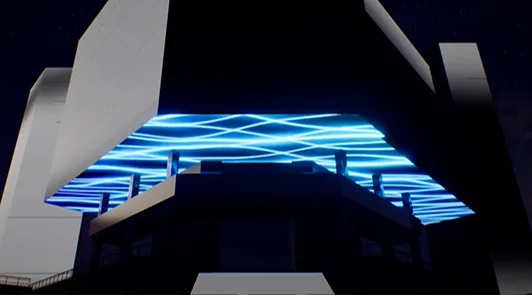
Because the architectural surfaces could not support conventional media imagery, the visual language relied on emotional abstraction and associative design principles. Thousands of distributed light points embedded across the bridge and surrounding architecture were choreographed as one coherent spatial medium — transforming infrastructure itself into cinematic narrative.
A critical part of the process was the creation of a precise digital twin of the bridge, museum, and concert hall complex. This allowed the team to develop and test lighting choreography, timing, and audiovisual compositions remotely in real time from Moscow, more than 3,300 kilometres from the site itself.
The project integrated more than 15,000 RGBW-controlled pixels, 2,000 linear RGBW fixtures, media façades, custom automation systems, and over 100,000 DMX addresses into one synchronised urban media environment capable of operating autonomously as permanent civic infrastructure.
The result is not simply a lighting show, but a city-scale emotional operating system where infrastructure, atmosphere, and public space merge into one immersive cultural experience.
THE RESULT
Completed in Krasnoyarsk in 2019, “The Heart of Siberia” became one of Russia’s first permanent city-scale multimedia lighting environments integrating bridge infrastructure, cultural institutions, media façades, and public space into one unified experiential system.
The project transformed a previously fragmented urban area into a highly recognisable civic landmark and public gathering space, establishing a new model for how urban infrastructure can function simultaneously as navigation system, cultural identity, and immersive media environment.
The installation received international recognition, including the Bronze A’ Design Award for Lighting Design, and became one of the visual symbols of contemporary Krasnoyarsk.
More importantly, the project demonstrated how light, media, and infrastructure can operate together not as decoration layered onto architecture, but as a spatial storytelling system capable of shaping emotional relationships between people and the city itself.