YEAR
2017
CITY
ST. PETERSBURG
SERVICE
CREATIVE DIRECTION

THE BRIEF
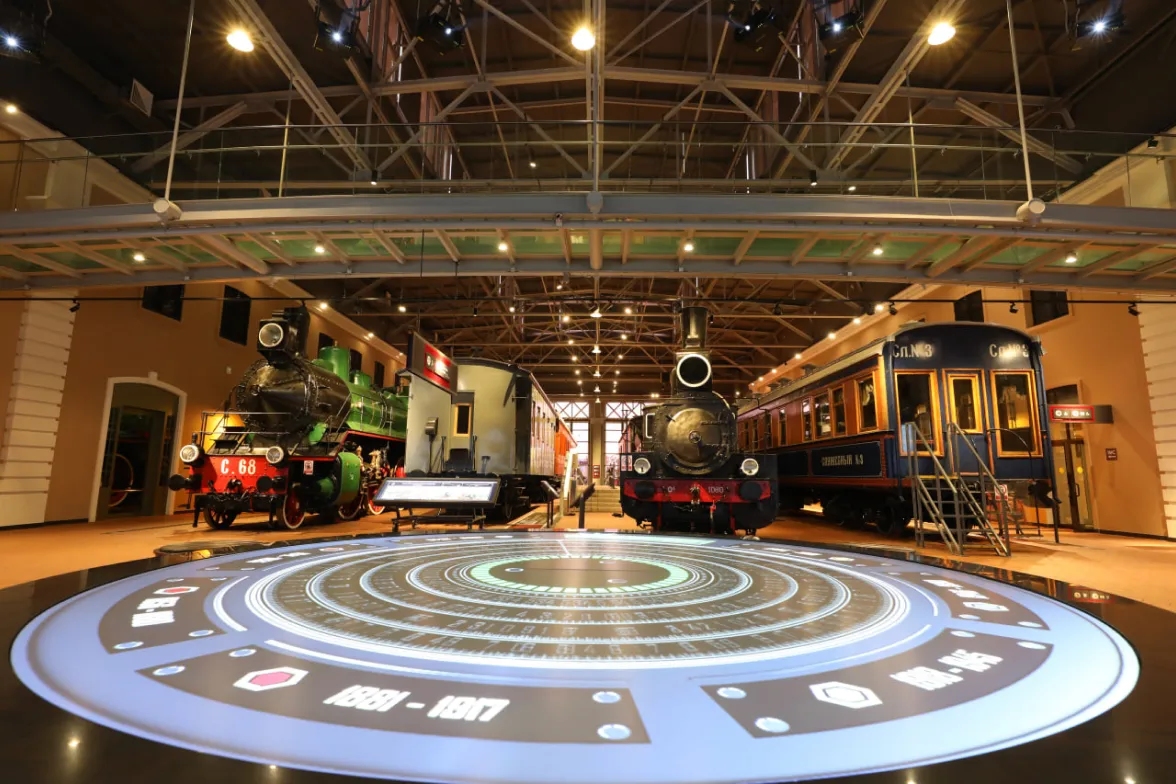
Russian Railways commissioned a permanent museum to house one of the world’s largest collections of railway heritage — 123 unique rolling stock exhibits spanning the technological and cultural history of rail transport.
But the ambition extended far beyond preserving locomotives. The museum was conceived as a major national cultural institution capable of explaining what railways fundamentally changed in modern civilisation: how they reshaped economies, connected territories, accelerated industrialisation, and transformed humanity’s relationship with distance, time, and movement at continental scale.
To translate these narratives into spatial experience, a complex multimedia environment had to be developed across 57,000 m² and more than 30 thematic zones. Pitch was commissioned to conceive, design, and deliver a multimedia exhibition system of 34 installations — combining interpretive storytelling, audiovisual environments, kinetic installations, and interactive media that could transform the collection from an archive of engineering into a living narrative about technology, society, and modernity.
MY ROLE
I led the project as Creative Director, Head of Research, Lead Scriptwriter, and Curator of the multimedia exhibition complex, overseeing the conceptual and narrative development of the museum from the earliest stages through opening.
My role focused on developing the narrative architecture and visitor experience strategy that structured the entire multimedia environment across more than 30 thematic zones. I directed the research process, led the scriptwriting team, and developed the interpretive frameworks that connected engineering history, industrial systems, and human experience into a coherent cultural narrative.
In close collaboration with the architects and exhibition designers from KMVI, we developed the project’s spatial storytelling system, emotional sequencing, and multimedia logic as an integrated visitor journey rather than a collection of separate installations. I also supervised the creation of audiovisual, interactive, kinetic, and immersive content across the exhibition, ensuring conceptual consistency between narrative, technology, and physical space.
Based on this framework, Pitch’s production and technical teams delivered multimedia production, AV integration, automation systems, installation engineering, and commissioning of the complex multimedia environment.
THE CHALLENGE
Industrial heritage museums face a recurring problem: the objects themselves are extraordinary, and institutions often assume they can speak for themselves. They rarely do. A locomotive in a hall is a technical artifact. The real question is what that artifact meant to society, how it changed human experience, and why it still matters today.
The challenge was to build a coherent narrative architecture across more than 30 exhibition zones and 57,000 m² without reducing the museum either to nostalgia or technical description. The collection demanded a framework capable of holding together engineering precision, historical transformation, industrial scale, and deeply human stories simultaneously.
The museum also had to function across radically different emotional registers. Visitors move from monumental locomotive halls to intimate personal narratives, from scientific explanation to immersive audiovisual environments, often over several hours of exploration. Maintaining narrative coherence across that scale required the visitor journey, multimedia systems, scenography, and interpretive structure to operate as a single integrated experience rather than as separate exhibitions placed side by side.
From the beginning, the project was conceived not as a corporate showcase, but as a public cultural institution where engineering heritage could become emotionally and intellectually accessible to broad audiences. Ironically, despite this intention, the museum went on to receive the Grand Prix for Best Corporate Museum after opening.
THE APPROACH
The conceptual move was to reframe the collection not around trains themselves, but around the railway as a system that transformed civilisation at industrial scale.
Rather than organising the museum as a chronological display of engineering artifacts, the exhibition was structured as a continuous spatial narrative about movement, ambition, technological progress, and the human experience of industrial modernity. Every thematic zone functioned as a chapter within a larger story: railways as infrastructure, railways as national expansion, railways as technological imagination, and railways as lived human experience.
Narrative architecture, spatial sequencing, multimedia systems, and audiovisual storytelling were conceived as one integrated framework from the earliest stages of development. The visitor journey was choreographed around shifts in scale, rhythm, and emotional intensity — moving between the overwhelming physical presence of locomotives and the invisible systems, labour, engineering, and personal histories embedded within them.
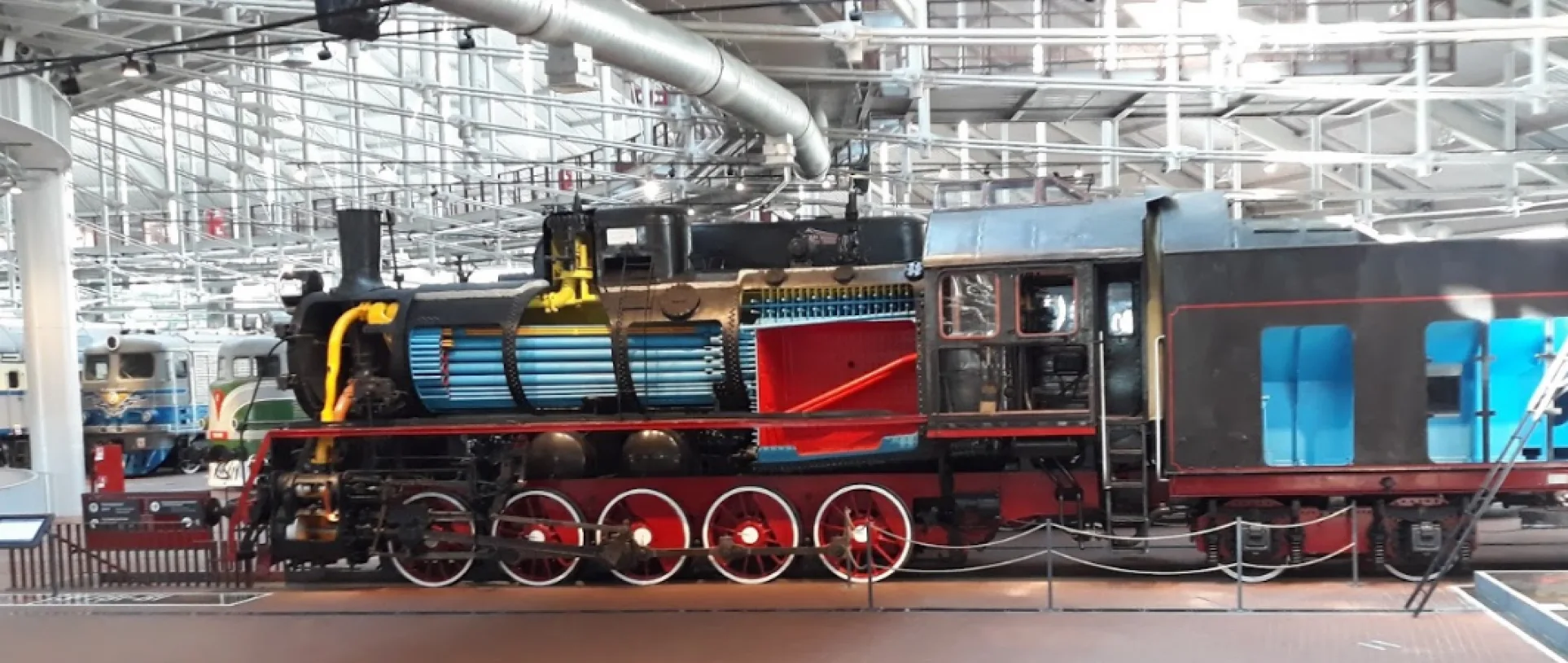
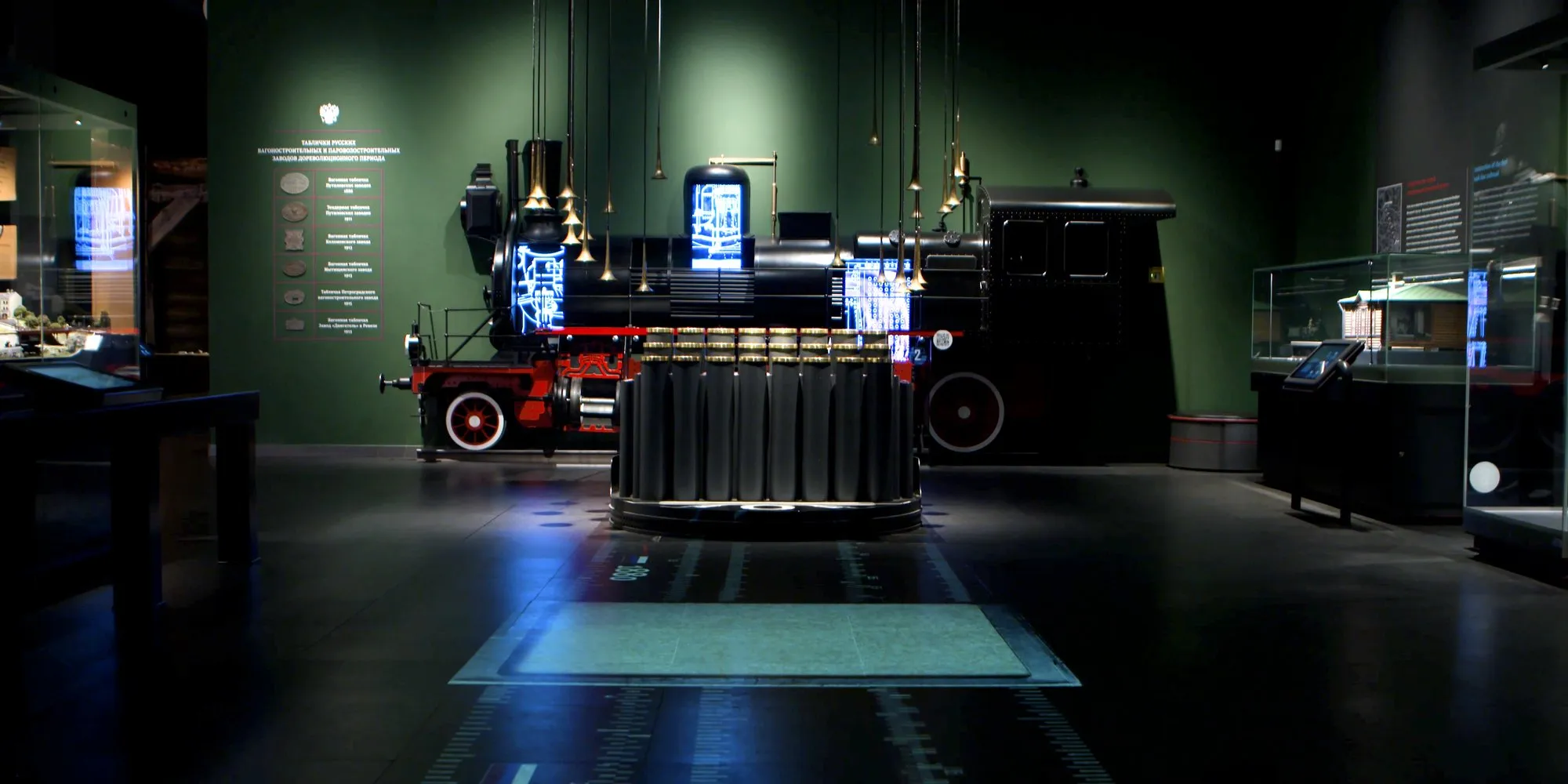
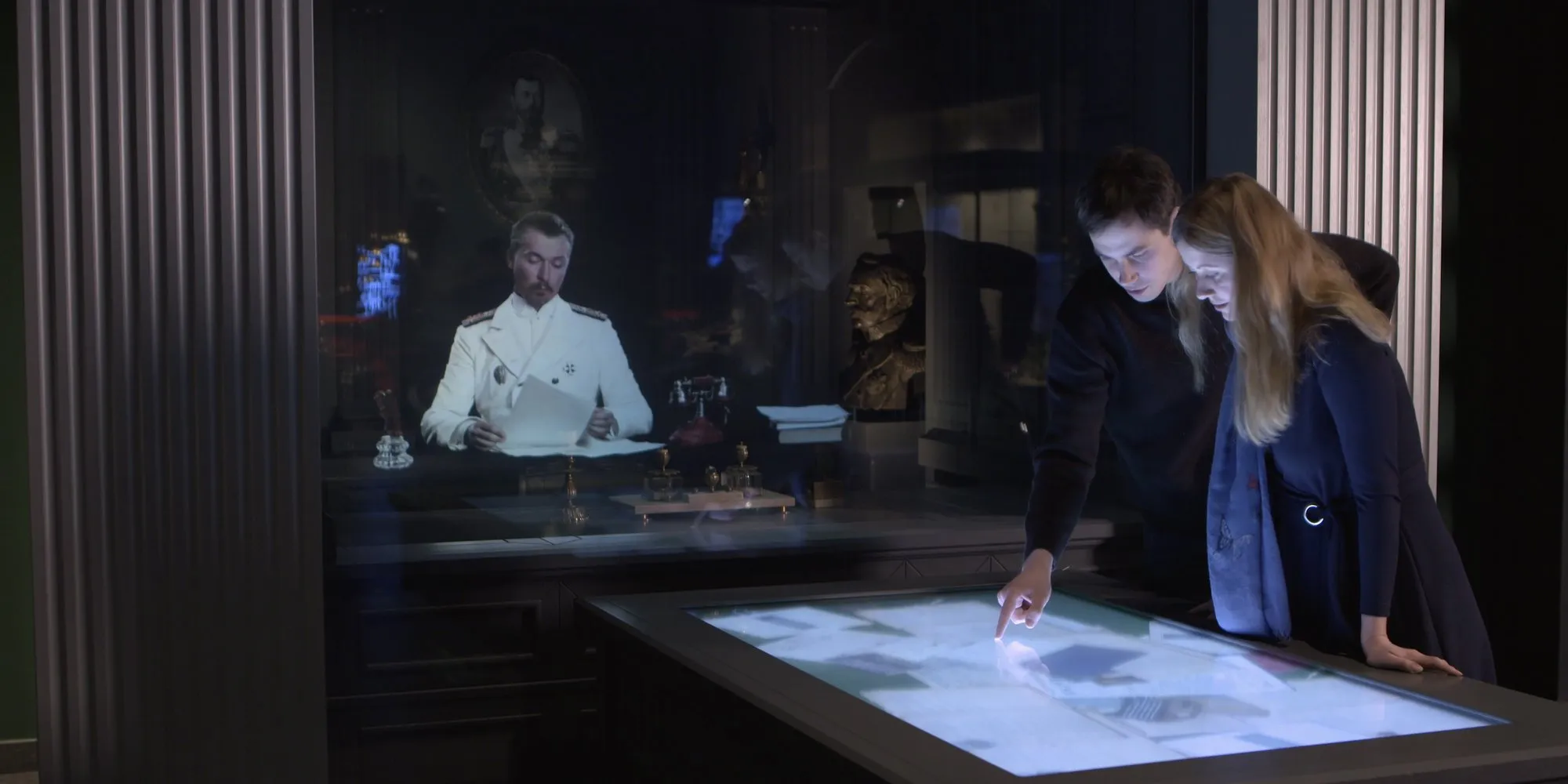
Multimedia installations were designed not as supplementary layers, but as interpretive instruments capable of revealing what physical objects alone could not communicate. Kinetic installations such as the “Virtual Cutaway of the TEP-70 Locomotive” transformed engineering into experiential storytelling through synchronised motion systems, precision audiovisual content, and reconstructed historical research. Immersive environments like “Time Switches” and “Teleport” used projection architecture, spatial sound, interactive mechanics, and cinematic narrative to place visitors inside different historical and speculative dimensions of railway culture.
The result was a museum where visitors do not simply observe industrial heritage, but experience railways as one of the fundamental systems that shaped the modern world.

THE RESULTS
Opened in Saint Petersburg in 2017, the Museum of Russian Railways became one of the world’s largest and most technologically advanced railway museums, combining historic rolling stock, immersive storytelling, and large-scale multimedia interpretation across 57,000 m².
Since opening, the museum has welcomed more than 2 million visitors and established itself as a benchmark for contemporary industrial heritage interpretation. The project demonstrated how complex engineering history can be transformed into emotionally engaging public experience without sacrificing scientific and historical rigor.
The museum received major national and international recognition, including the Grand Prix for Best Corporate Museum, nomination for the European Museum of the Year Award (EMYA 2019), and multiple international awards for audiovisual and immersive installations from the European Museum Academy, Europa Nostra, A’ Design Award, and Future Mars Life competition supported by the China National Space Administration.
More importantly, the project helped redefine how industrial heritage museums can operate in the 21st century — not as repositories of machinery, but as cultural institutions capable of translating technological systems into meaningful human stories.