YEAR
2026
CITY
ASTANA
SERVICE
CREATIVE DIRECTION
THE BRIEF
Kazakhstan’s national AI strategy required a public cultural form — something capable of making artificial intelligence understandable, emotionally meaningful, and institutionally credible for broad audiences.
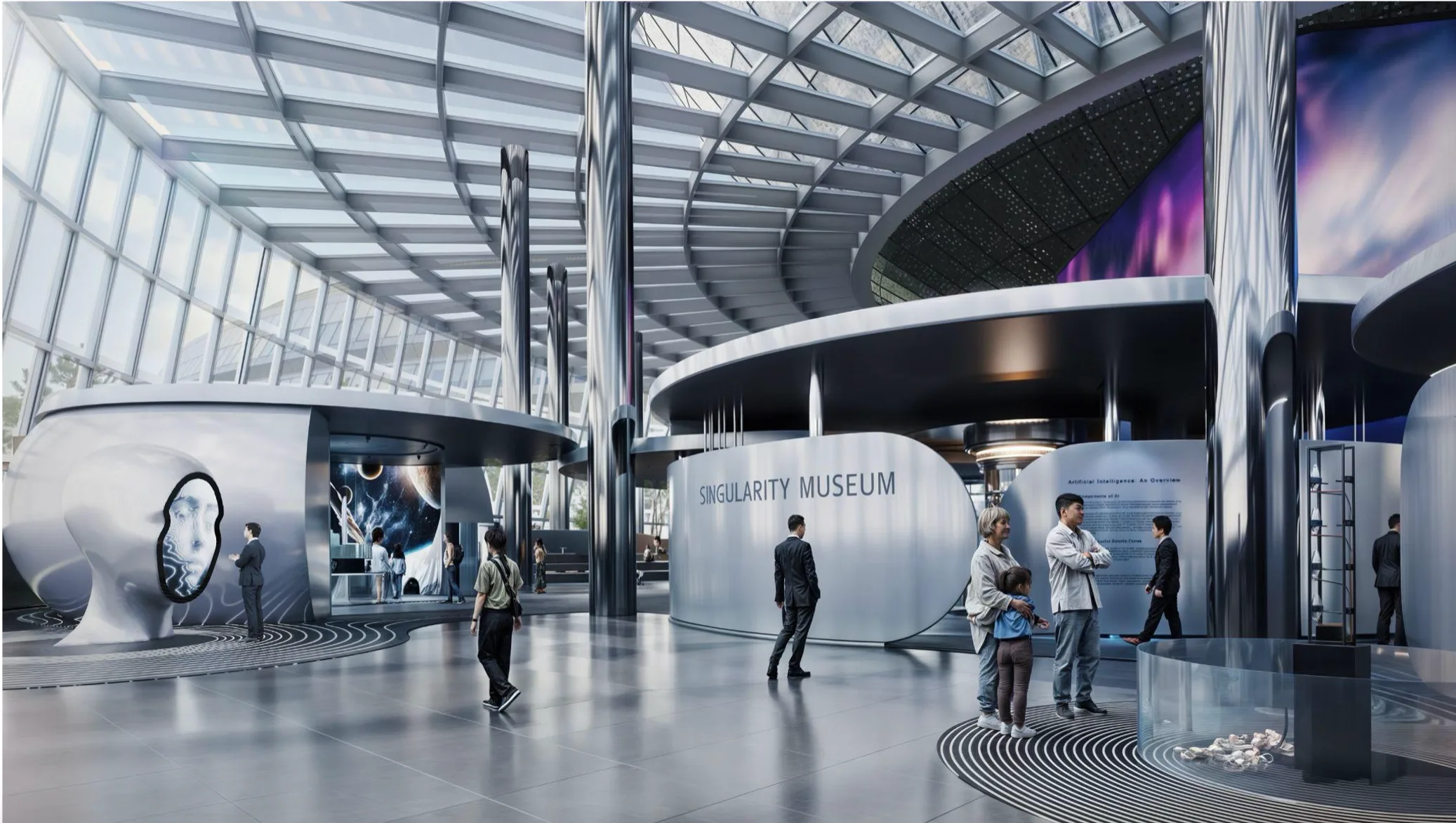
The commission called for the world’s first integrated AI ecosystem: a hybrid institution combining a public cultural space, Museum of Singularity, AI cinema, education facilities, startup accelerator, and AI-government infrastructure within the iconic 80-metre glass sphere in Astana — one of the most technologically complex buildings in Central Asia. Operated by alem.ai, the centre was conceived not simply as an exhibition venue, but as a national platform positioning Kazakhstan as a future AI hub for the region.
The concept was selected through an international competition. The narrative and visitor experience framework I developed with Pitch became the foundation for the project as realised.
MY ROLES
I served as Head Researcher, Curator, and Creative Director for the Level 1 public space, including the Museum of Singularity and the AI cinema.
From the international competition stage through realisation, I led the development of the visitor experience strategy, narrative architecture, and conceptual positioning of the project — defining content logic, interpretive frameworks, and pre-design programming before spatial and technological systems were locked.
I also pioneered the AI-first curatorial methodology developed for this institution, deploying networks of LLM-based agents as research, narrative development, and co-curation systems. I directed the research and scriptwriting teams and supervised full-cycle content development across more than 30 multimedia installations and 150+ content positions, ensuring conceptual coherence between narrative, technology, architecture, and interactive systems.
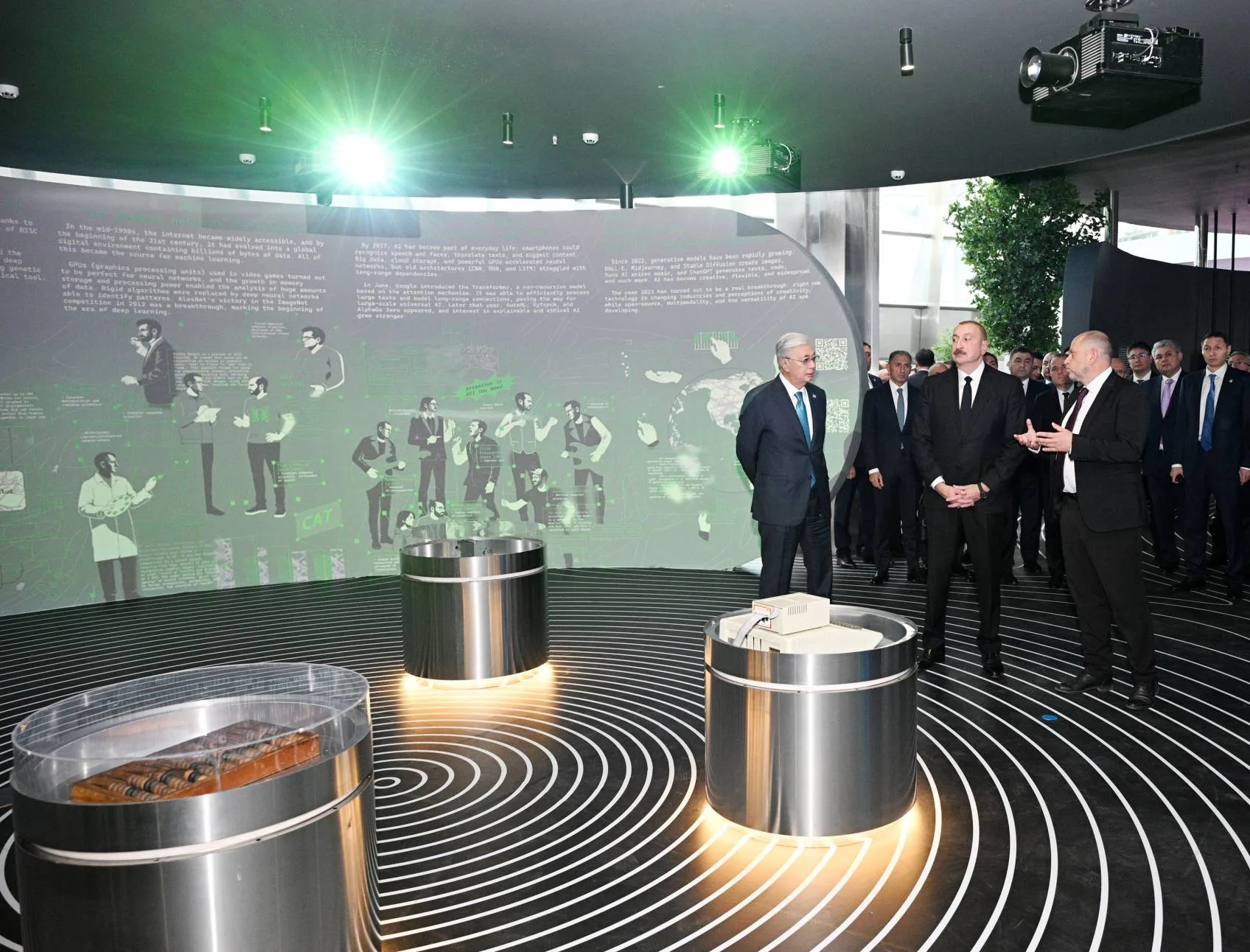
As the concept author, curator, and creative director, I also personally presented the project during the official opening tour for the presidents of Kazakhstan and Azerbaijan.
THE CHALLENGE
Artificial intelligence resists conventional museum logic. It has no stable objects, no linear history, and no fixed cultural form. It is abstract, contested, and evolving faster than most interpretive frameworks can adapt. The standard institutional response — technology showcases, interactive demos, and futuristic aesthetics — often produces fascination without understanding.
The deeper challenge was one of acceleration. During the development process itself, entire paradigms of human-AI interaction became obsolete. Within a short period, the dominant interface shifted from text-based systems to conversational avatars capable of natural speech, emotional response, and embodied interaction. Concepts developed at the beginning of a production phase could not simply be handed downstream for execution — they had to be continuously rethought around capabilities that did not yet exist when the original brief was written.
At the same time, there were effectively no precedents. No comparable public AI institution existed internationally at this scale. Every decision — from narrative hierarchy and visitor psychology to spatial logic and content architecture — had to be developed without a proven institutional model, inside a building of exceptional engineering complexity, for a subject still actively redefining itself in real time.
THE APPROACH
The conceptual move was to stop treating AI as a subject and start treating it as a condition.
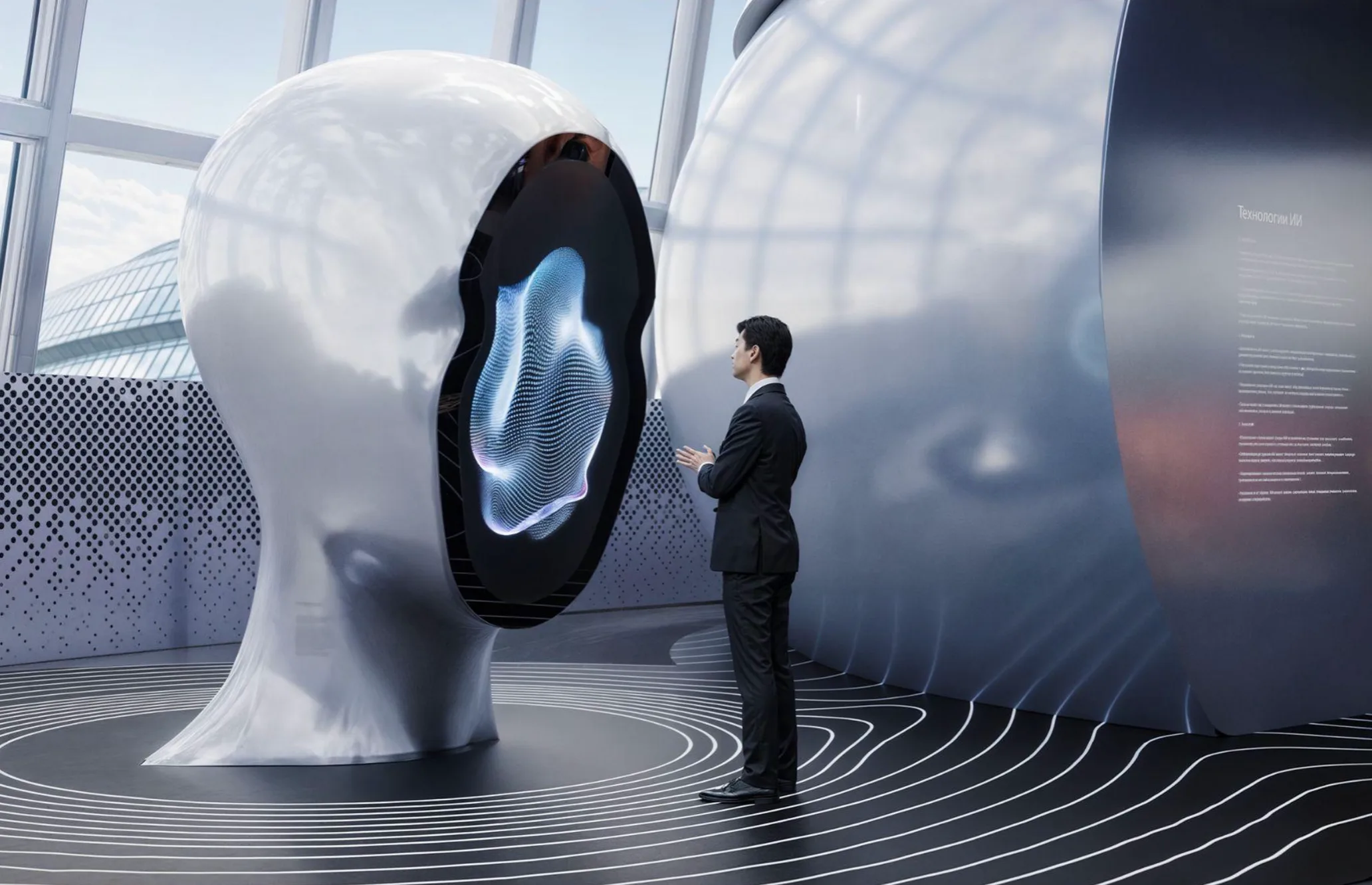
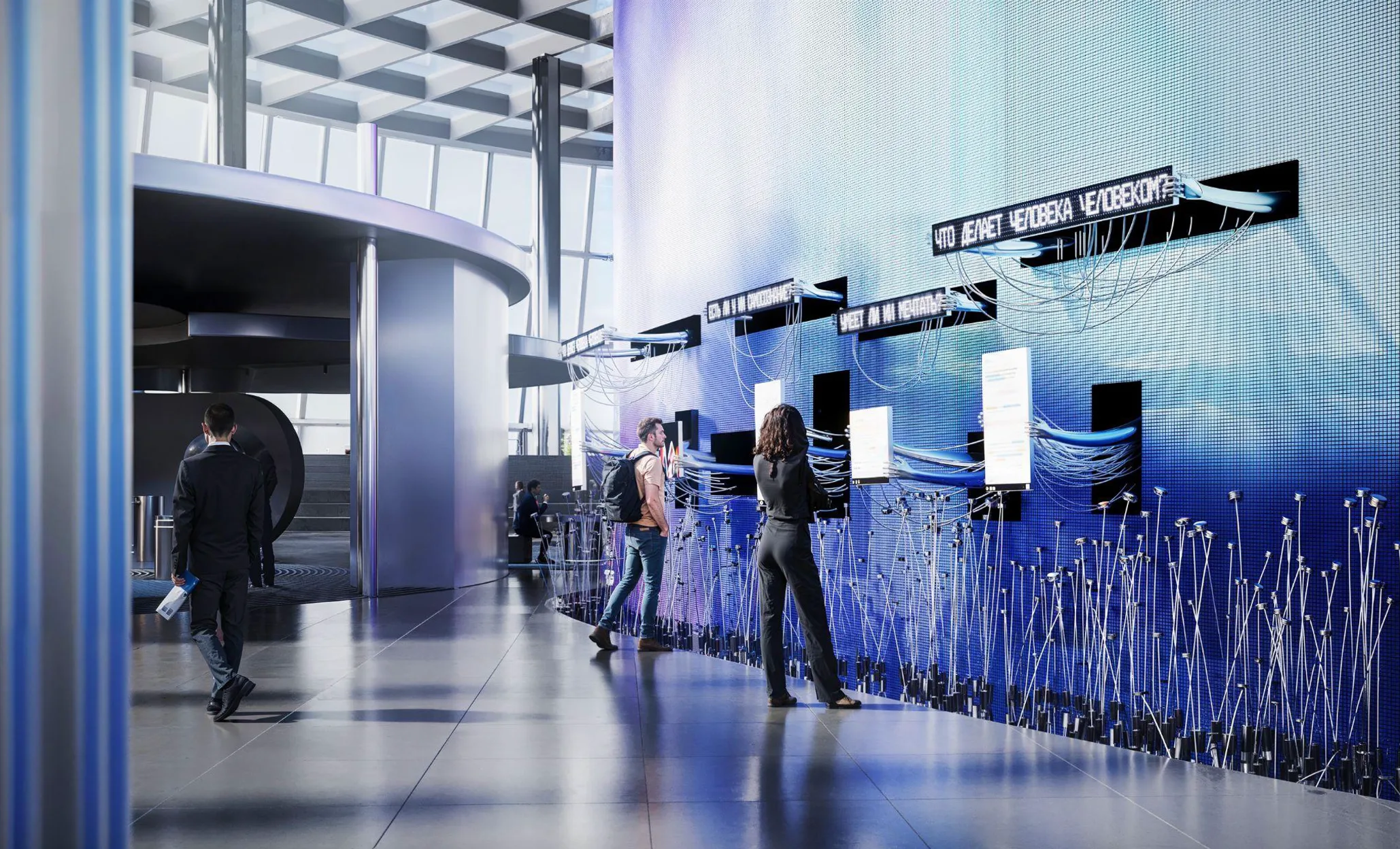
Rather than simply exhibiting artificial intelligence, the museum operates through AI systems themselves — using adaptive content structures, generative narratives, conversational interfaces, and LLM-based interpretive systems to create visitor journeys that behave like the phenomenon they describe. The institution itself became part of the argument: a dynamic environment where content evolves, responds, and reconfigures in ways that position visitors not as passive observers, but as participants inside an emerging technological reality.
I developed an AI-first curatorial methodology for the project, deploying networks of LLM-based agents as research, narrative development, and co-curation systems. Rather than using AI as a decorative technological layer, the methodology treated it as cultural infrastructure embedded directly into the interpretive process itself.
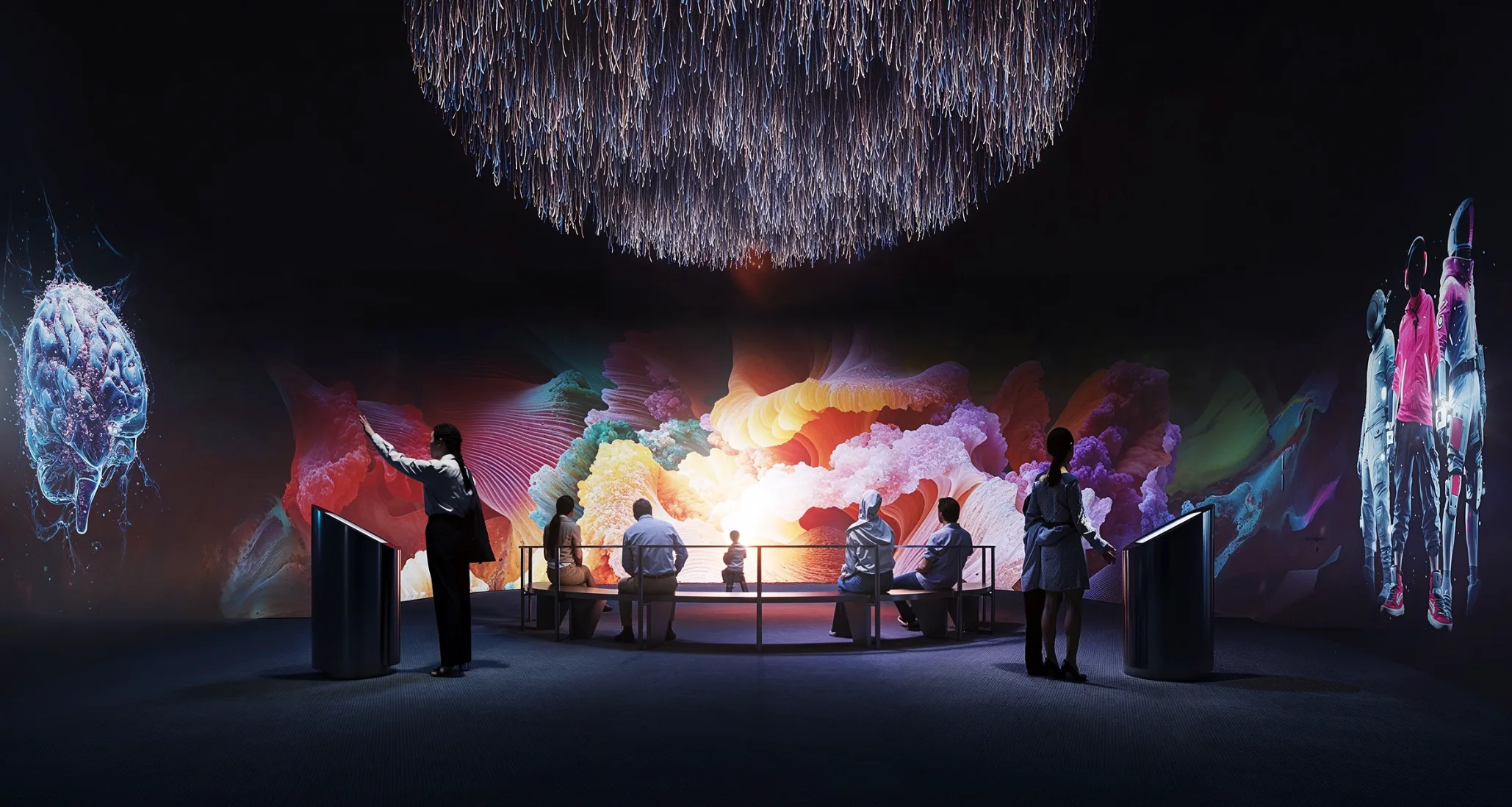
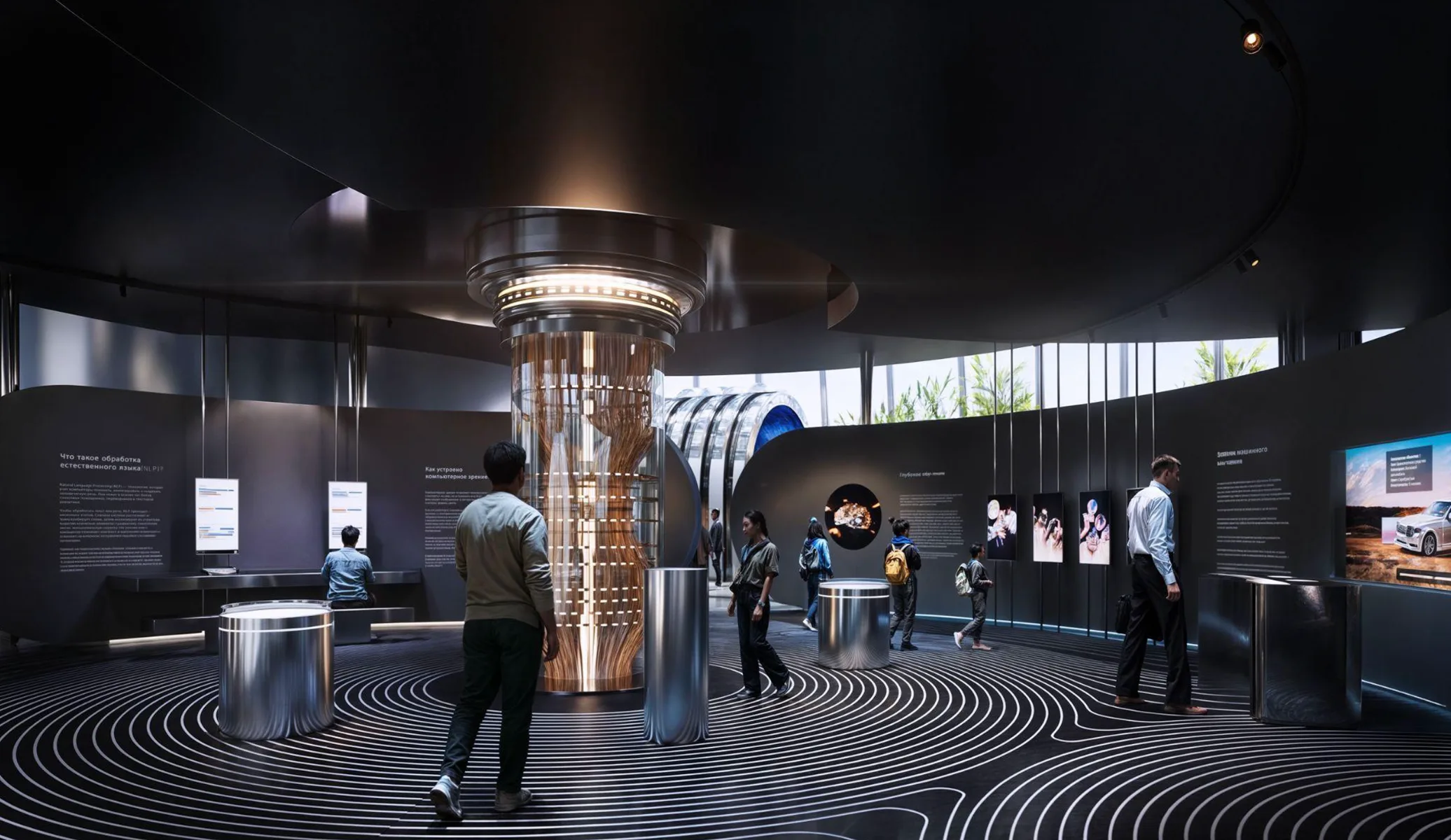
Narrative architecture was structured across several interconnected public experience layers. The Museum of Singularity explores AI as technological, social, and philosophical transformation through immersive installations, generative media, and interactive systems. A dedicated robotics showroom introduces visitors to embodied AI and autonomous systems through real-world applications and speculative prototypes. A specially designed AI playroom for children translates machine learning, robotics, and computational thinking into tactile and collaborative experiences for younger audiences.
The project also includes what is believed to be the world’s first dedicated AI cinema space — an immersive environment designed specifically for generative, adaptive, and AI-assisted audiovisual storytelling. Rather than functioning as a conventional screening room, the cinema operates as an experimental narrative platform exploring new relationships between audience, machine intelligence, and cinematic form.
A major curatorial priority was integrating works by internationally recognised artists alongside technological and scientific content, ensuring the institution would not be perceived as a technology showroom, but as a cultural platform examining how AI reshapes creativity, identity, perception, and society itself.
Because the broader mission of the centre is to support the future development of Kazakhstan’s AI ecosystem and startup culture, significant attention was devoted to the role of public discourse within the institution. The project was designed not only to explain AI technologies, but to create a public environment where visitors could engage critically with questions surrounding automation, robotics, ethics, labour, creativity, governance, and the societal consequences of intelligent systems.
Each narrative layer was assigned its own spatial logic, media language, interaction model, and emotional rhythm — designed to move visitors from curiosity and wonder toward critical reflection, discomfort, and ultimately agency.
The result is not a museum explaining the future from a distance. It is a space where visitors actively rehearse how to think about living inside it.
THE RESULT
The International Centre for AI and Museum of Singularity opened in Astana in 2026 as the world’s first integrated public AI ecosystem at institutional scale — a hybrid cultural platform operating simultaneously as museum, laboratory, education centre, startup hub, and public forum.
Located within the 80-metre glass sphere architectural landmark at the centre of Astana and operated by alem.ai, the institution combines more than 30 multimedia installations and 150+ interactive content experiences designed to communicate artificial intelligence not as abstraction, but as a living force already reshaping society, governance, labour, and culture.
The project established a new model for how emerging technologies can be interpreted through museum and public experience design. More importantly, it demonstrated that AI can function not simply as exhibition content or technological spectacle, but as an active curatorial and narrative system embedded into the structure of the institution itself.